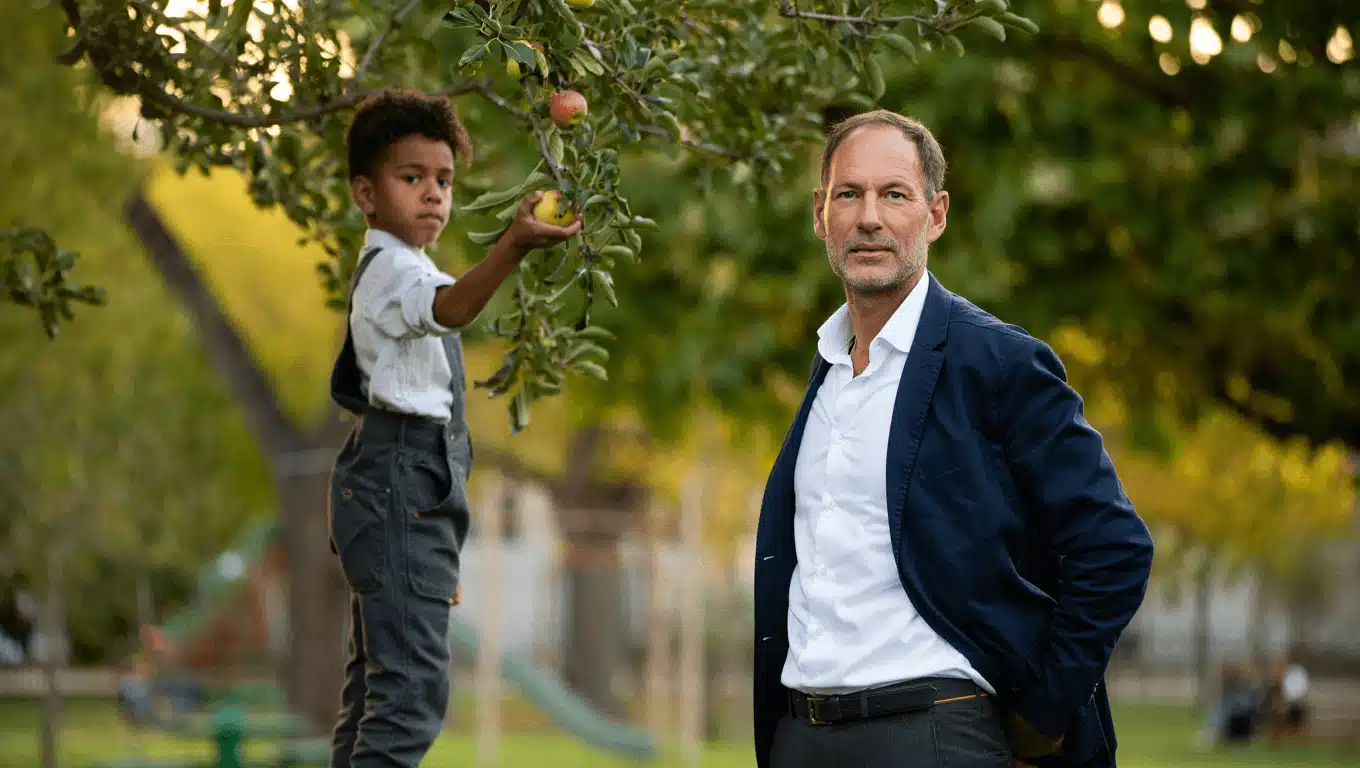
Navigating the complexities of parenthood can often feel like walking a tightrope. On one hand, there’s the instinct to protect and nurture, while on the other, there’s the pressing necessity to foster independence in our children. Paolo Crepet, a prominent voice in the realm of child psychology, has long advocated for a rather unconventional approach: the notion that the best mothers are those who cultivate distance. This perspective, while perhaps jarring at first glance, speaks to a fundamental issue in modern parenting—the subtle yet pervasive trend of unconditional love morphing into systematic control.
The pressure to shield children from every bump in the road can inadvertently stifle their growth. This brings us to the concept of “helicopter parenting,” a term coined in developmental psychology to describe overly involved parents who swoop in at the slightest sign of trouble, removing obstacles before they even arise. While it might seem like a protective measure, this behavior often leads to the opposite effect, leaving children anxious and ill-equipped to handle life’s challenges on their own.
The Dangers of Overprotection
A closer look at the work of Edward Deci and Richard Ryan from the University of Rochester reveals that autonomy is one of the three fundamental needs for healthy development, alongside competence and relatedness. When autonomy is consistently suppressed, the outcome is a troubling rise in anxiety, diminished self-regulation skills, and an increased emotional dependence.
Quality Over Quantity in Parenting
Crepet, though not a developmental psychologist, emphasizes a crucial aspect of parenting: it’s not the amount of time spent together that matters, but rather the quality of that presence. His model suggests being a stable, non-intrusive figure in a child’s life—a safe base to return to rather than an overbearing presence that stifles growth. This notion aligns with psychologist Mary Ainsworth’s definition of a secure base, which is someone to return to rather than someone who never lets go.
Building Identity Through Experience
The critique extends beyond individual families into the broader societal context. Children who remain sheltered at home for extended periods often struggle to forge their own identities. The underlying message of “stay put, it’s safer” can delay their ability to make independent decisions. The daily grind of life—though sometimes daunting—holds educational value that is lost when parents continuously remove every struggle. This avoidance of effort doesn’t prepare children for reality, and the fragility that results can manifest abruptly later on. It’s not a matter of nostalgia; it’s a commentary on the nature of resilience.
The Power of Non-Verbal Communication
There’s another layer to consider, that of communication. Every parenting choice conveys a message, even in silence. A constant intervention signals to a child, “You can’t manage on your own,” while a thoughtfully maintained distance conveys trust and confidence in their abilities. This doesn’t equate to indifference; rather, it embodies a belief in their capability to navigate the world.
Research into secure attachment shows that children raised by caregivers who are present but not suffocating tend to develop a greater tolerance for frustration and stronger relationship-building skills in adulthood. Calibrated parenting isn’t about emotional coldness; it’s the conscious choice to believe that a child can learn to thrive in the world. Providing space is not absence; it reflects a form of trust that is nurtured daily and persists even when parents are not physically around.
Parenthood is a beautiful yet challenging journey. But does it truly lead to happiness?
Similar Posts:
- Crepet Warns: Why Are Children Losing Neurons?
- Umberto Galimberti Reveals: The Everyday Mistake All Parents Make!
- Child Calms Down After Hours of Distress: Mom Shocked by What Finally Helped Him Sleep
- Italy’s Rising Birth Age: Women Now Average 33.4 Years at First Childbirth!
- Parents Fly to Sharm el-Sheikh: 5 Siblings Left Home Alone in Trieste!

Jason R. Parker is a curious and creative writer who excels at turning complex topics into simple, practical advice to improve everyday life. With extensive experience in writing lifestyle tips, he helps readers navigate daily challenges, from time management to mental health. He believes that every day is a new opportunity to learn and grow.