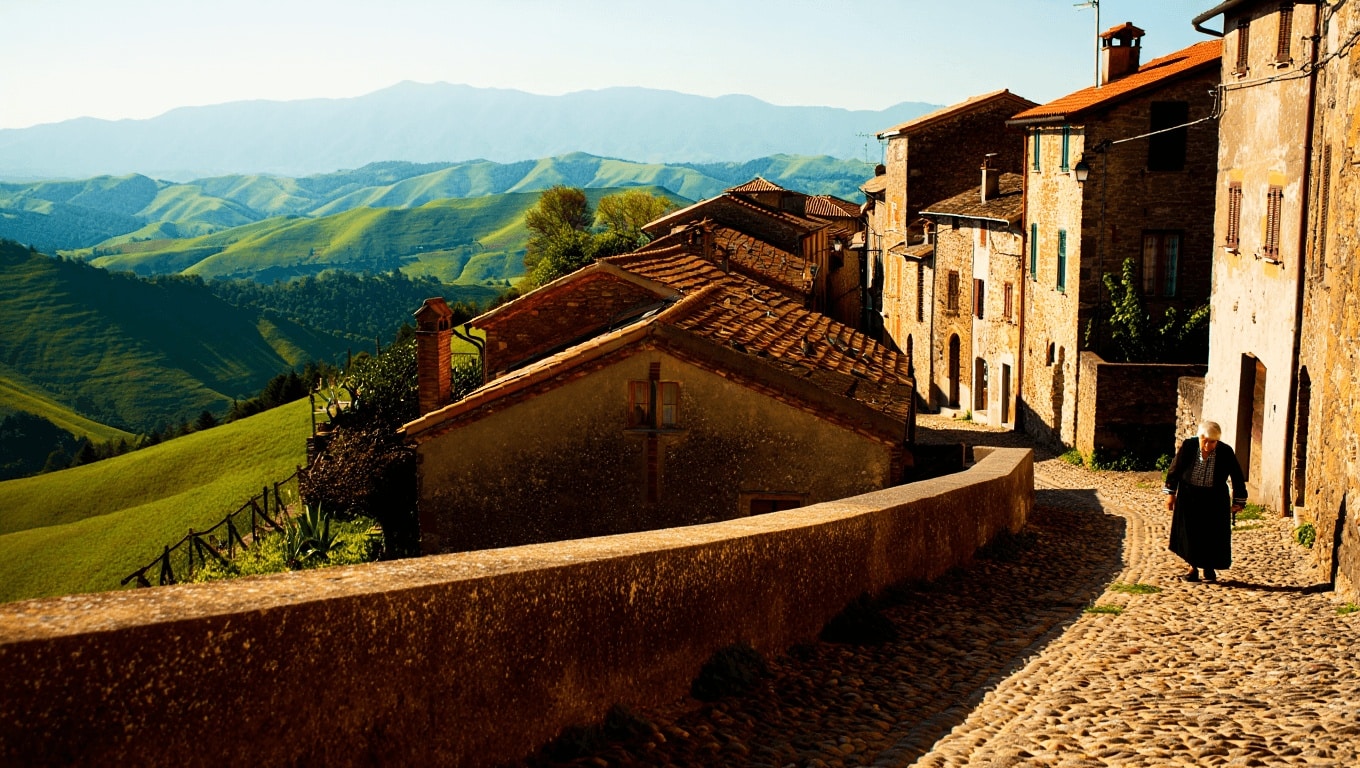
In the picturesque region of Piedmont, Italy, a growing concern looms over the fate of its small towns. With over 1,180 municipalities in the area, nearly half of them—590, to be exact—house fewer than a thousand residents. Among these, Moncenisio stands out as the tiniest, boasting a mere 30 inhabitants. The demographic trends are alarming; in 2025, the region recorded 53,019 deaths compared to only 23,839 births. This stark contrast is particularly pronounced in the mountain villages, where the countdown to oblivion seems to tick ever louder.
One such village grappling with this reality is Macra, nestled in the Media Valle Maira at an elevation of approximately 900 meters. With its charming 42 residents, Macra is rich in natural beauty, featuring a cyclamen trail, a cozy refuge, a restaurant, a pizzeria, and a church overlooking seventeen quaint hamlets. It has earned the dubious title of the fourth least populated municipality in Italy, as per the latest Istat data from February 2026. While the land remains, the number of those who call it home is dwindling, turning them into a dwindling minority.
Piedmont’s Vulnerable Provinces
The provinces of Cuneo, Verbano-Cusio-Ossola, and Vercelli are at the forefront of this depopulation crisis. Biella, for instance, is the oldest province in Piedmont, with an average age of 50.4 years, having lost 6.8% of its population over the past decade. Vercelli, too, faces challenges, reporting an average age of 49.6 years and a population decline of 5.2%. Sociologist Eugenia Mercuri emphasizes the critical role of essential services—such as transportation, healthcare facilities, and everyday points of reference—in differentiating between thriving regions and those that are emptying out.
The dual challenges of job scarcity and geographical isolation further compound the issue in these provinces.
Areas of Growth and Potential Solutions
Not all of Piedmont is on a downward trajectory, however. The Novara province stands out with a growth rate of 4.2% during the same period, supported by an average age of 46.8 years. Its proximity to Milan and robust industrial presence helps mitigate internal vulnerabilities. Similarly, the Torinese area has experienced a modest growth of 1%, largely thanks to the capital city and its metropolitan region.
Mercuri proposes immigration as one viable solution to counteract the trend of depopulation, pointing to the successful model of Riace in Calabria as an example of active repopulation. Implementing similar strategies in Piedmont’s smaller towns would require targeted investments, yet the success stories indicate that even a village with thirty residents can find ways to thrive rather than fade away.
Similar Posts:
- Summer Sales 2026: Official Dates Revealed Region by Region!
- Italy’s Coolest Village: Discover This Hidden Gem at 1,300 Meters Above Sea Level!
- City of Mirrors: A Surprising Place Where Everything Reflects!
- World’s Smallest School: An Italian Island Mystery for Just One Student!
- Italy’s Rising Birth Age: Women Now Average 33.4 Years at First Childbirth!

Jason R. Parker is a curious and creative writer who excels at turning complex topics into simple, practical advice to improve everyday life. With extensive experience in writing lifestyle tips, he helps readers navigate daily challenges, from time management to mental health. He believes that every day is a new opportunity to learn and grow.