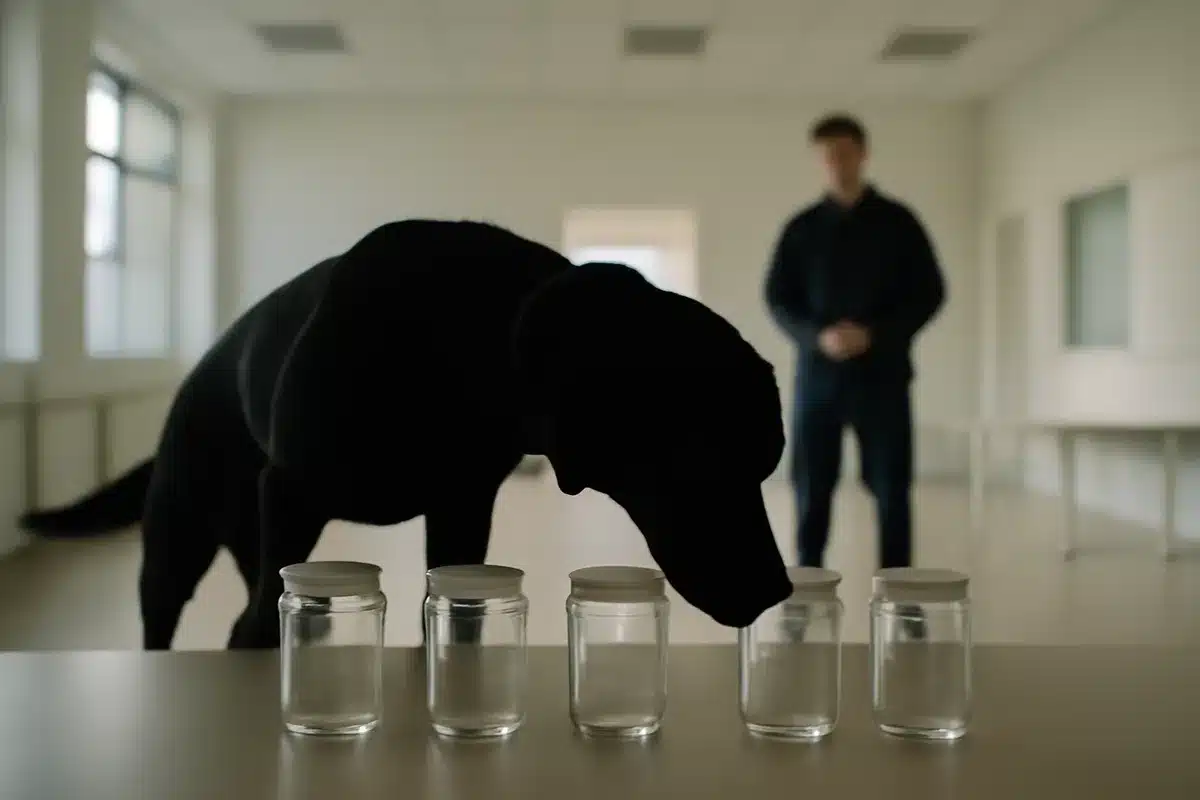
Have you ever heard of bio detection dogs? Meet Callie, a specially trained canine that has the remarkable ability to identify chemical changes linked to the presence of tumors. Currently, Callie is participating in an innovative scientific study conducted by Medical Detection Dogs in partnership with the Open University. The aim? To detect cancer early and non-invasively, potentially revolutionizing how we approach diagnosis.
In a groundbreaking experiment, dogs are tested using urine samples from individuals diagnosed with colorectal cancer and from healthy subjects. Their task is to differentiate between the two, using their keen sense of smell. When the dog detects a telltale scent, it signals this by stopping and tapping its paws on the ground. This extraordinary process highlights the incredible capabilities of our four-legged companions.
The Invisible Footprint of Cancer
Researchers explain that a tumor cell operates with a metabolism that significantly differs from that of a healthy cell. This alteration affects the surrounding environment, leading to a unique chemical signature.
The most intriguing substances in this context are volatile organic compounds, commonly referred to as VOCs. These molecules can evaporate and are excreted through urine, making them detectable by dogs. With hundreds of millions of olfactory receptors in their noses and brains adept at processing smells, these animals can identify even minute traces of substances, even when they are mixed with many others. The goal of their training is to recognize these specific chemical sequences.
The Training Process
What does the training process entail? The urine samples mentioned earlier are stored in identical containers, which the dog sniffs one by one. The dog is trained to indicate the “positive” sample, and when it does so correctly, a reward is given.
As the training progresses, the experiments become increasingly complex, incorporating blind tests to ensure that the dog is not inadvertently influenced by its handler. It is crucial that the animal independently identifies the cancer signal.
Understanding Colorectal Cancer
The focus on colorectal cancer is no coincidence. This type of cancer is among the most common, and early detection is critical. With rising cases among individuals under 50, it is more important than ever to recognize this disease in its initial stages. Early identification enhances the chances of effective intervention.
Currently, no method exists that is simultaneously accurate, straightforward, and minimally invasive for widespread use. Urine sampling offers a clear advantage: it is easy to collect and does not require invasive procedures.
However, the scientific community has yet to fully validate the accuracy and reproducibility of this approach.
Future Implications
At this stage, Callie is not able to make diagnoses. Nonetheless, scientists are hopeful that with her and other dogs, this could change. Should these animals reliably recognize specific chemical profiles, it would pave the way for identifying the molecules responsible for these signals.
This advancement could significantly enhance survival rates, as recognizing these molecules would lead to the development of tools capable of detecting tumors before they become symptomatic.
Similar Posts:
- Microbe Devours Tumors: Science Aims to Create Bacteria Allies Against Cancer
- Influenza-Detecting Chewing Gum: The Game-Changer in Prevention You Need to Know About!
- A scientific study suggests that hot springs could have been the cradle of life on Earth
- Bridging the Skills Gap: Preparing Tomorrow’s Workforce for the Utility Industry
- Telemarketing Calls Driving You Crazy? Use This Trick to Get Rid of Them for Good

Jason R. Parker is a curious and creative writer who excels at turning complex topics into simple, practical advice to improve everyday life. With extensive experience in writing lifestyle tips, he helps readers navigate daily challenges, from time management to mental health. He believes that every day is a new opportunity to learn and grow.