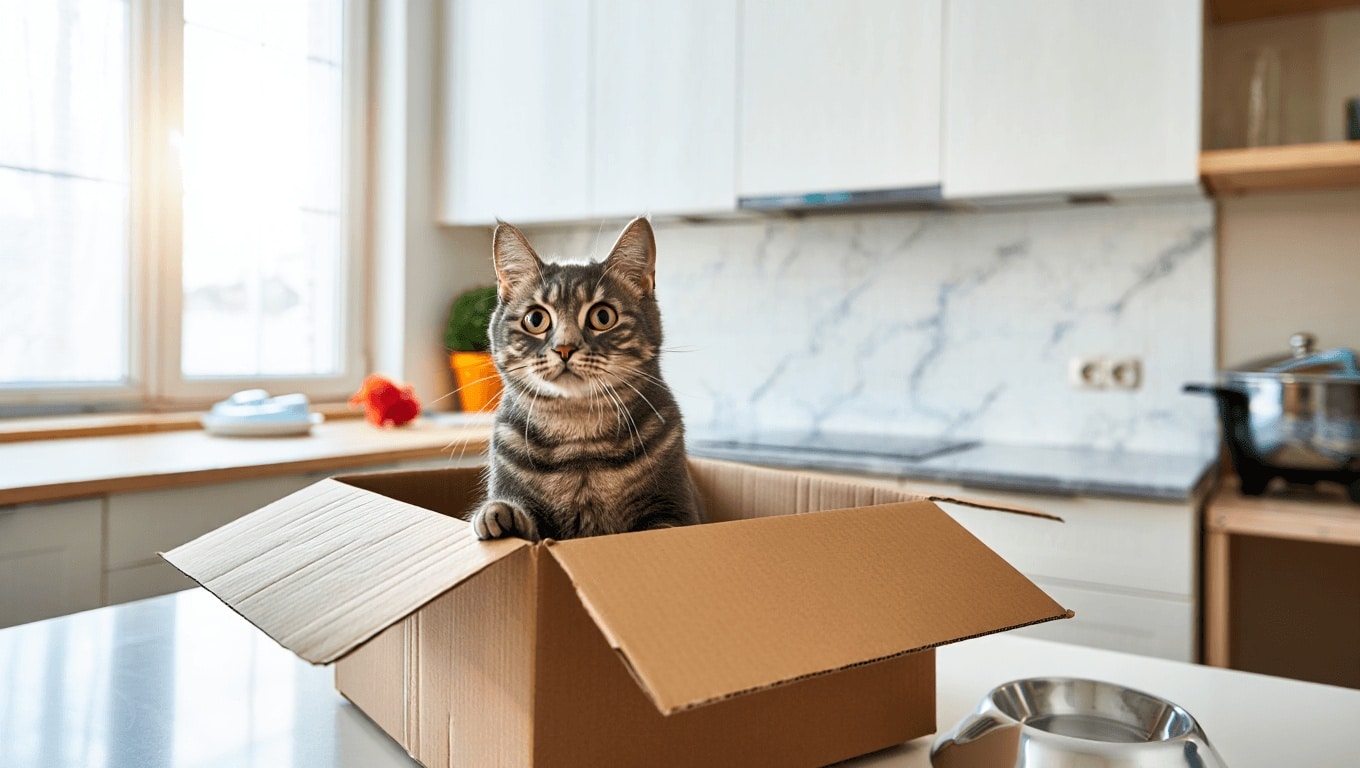
Living with a cat can often feel like embarking on an adventure filled with quirks and surprises. Whether it’s witnessing sudden bursts of energy in the middle of the night or finding your feline friend diving headfirst into a cardboard box, these behaviors can easily be mistaken for mere whims. However, there’s a deeper significance behind these actions that reveals how cats express their emotions and needs to their human companions.
Take, for instance, the unexpected sprint that seems to come from nowhere. These moments are a glimpse into a cat’s predatory instinct, where they release pent-up energy accumulated throughout the day by engaging in a mock attack against an imaginary prey. Similarly, when a cat hops into a cardboard box, it’s not just looking for a cozy spot; it’s seeking shelter from perceived dangers and finding a comforting retreat, which is particularly helpful during stressful transitions, such as moving homes. Additionally, these boxes help regulate their body temperature, which tends to be higher than ours, especially during the cold winter months.
The Significance of a Cat’s Back Turned to You
When a cat turns its back or presents its tail, it’s not a sign of disregard. On the contrary, this behavior is a **demonstration of trust**. By exposing vulnerable areas and lowering its defenses, the cat is indicating that it feels safe in its environment and with the person nearby.
Cats also communicate affection through subtle gestures like head bumps and cheek rubs, marking their territory with the scent of their **identifying pheromones**. Yes, these creatures are indeed capable of forming emotional bonds and experience feelings in profound ways.
Identifying Unusual Behavior as a Sign of Distress
Certain behaviors warrant attention, especially when they deviate from the norm. If a generally clean cat starts eliminating outside its litter box, it could stem from a variety of practical issues: an unsuitable type of litter, an improperly placed litter box, or more serious concerns like a urinary tract infection (**FLUTD**) or stress.
In senior cats, persistent **meowing** may indicate hearing loss, hyperthyroidism, or cognitive decline. Additionally, a noticeable decrease in grooming behavior, or obsessive grooming leading to hair loss, can signal underlying health problems.
The key to distinguishing between normal habits and potential health alarms often lies in consistency. A behavior that your cat displays regularly is likely a part of its personality, while any **sudden changes** in established routines—particularly regarding litter habits, vocalizations, or grooming—should prompt a visit to the vet. Additionally, any shifts in appetite should also be carefully monitored.
Similar Posts:
- The minimum temperature to maintain good health at home and the ideal one to save on heating this winter
- Should you heat unused rooms in your home ?
- Save Your Christmas Star: Avoid This Common Mistake that Causes Early Wilting!
- Lose Weight Stress-Free: Discover Dr. Berrino’s 4 Golden Rules for Dieting Success
- The way you organize your shopping cart at the supermarket could hint at sociopathic tendencies, according to a study

Jason R. Parker is a curious and creative writer who excels at turning complex topics into simple, practical advice to improve everyday life. With extensive experience in writing lifestyle tips, he helps readers navigate daily challenges, from time management to mental health. He believes that every day is a new opportunity to learn and grow.