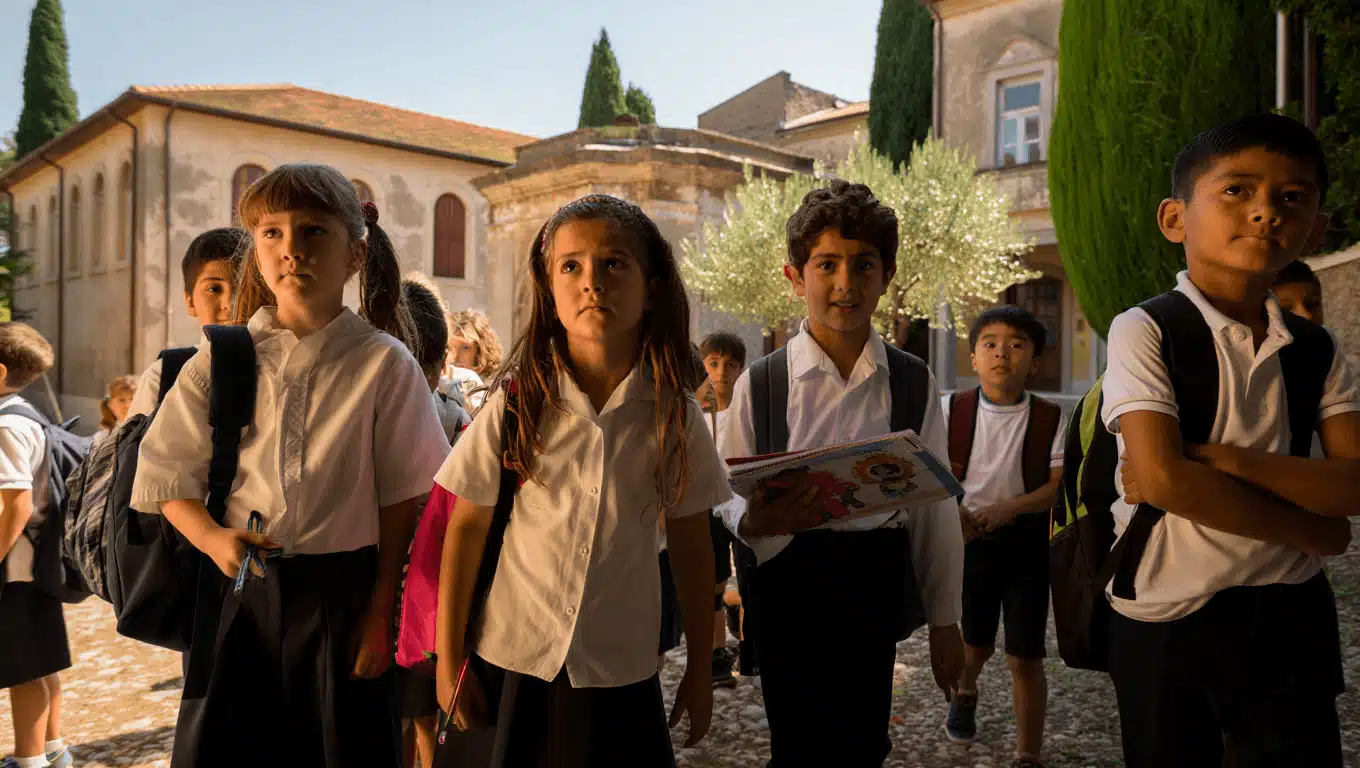
The Italian school calendar is often seen as a unique case in the European landscape, characterized by an extended summer break that lasts from mid-June to mid-September, totaling around thirteen weeks or ninety-five days. This lengthy hiatus is quite distinctive when compared to other major European nations; Spain offers up to eleven weeks off, France provides eight weeks, while Germany and the Netherlands have only six weeks. Interestingly, despite this substantial break, Italian students do not attend school any less than their peers in other countries.
Legally, Italian students are required to have two hundred days of classes each year, one of the highest figures in Europe. In fact, Italian schoolchildren spend more hours in the classroom than many of their counterparts elsewhere, with primary school students clocking in at 917 hours annually compared to the OECD average of 804, and middle school students at 990 hours versus 909. The catch here is that these hours are densely packed into the academic year from September to June, with minimal breaks in between. The Christmas holidays last about two weeks, there’s a six-day break for Easter, and a few national holidays. In contrast, other countries distribute their breaks more evenly throughout the year, allowing for additional time off in the fall, winter, and spring.
One critical topic that arises is the phenomenon known as summer learning loss. The prevailing notion is that three months away from school can erase a portion of what students have learned. A study from 1996 estimated this loss to be equivalent to about a month of schooling, with a more significant impact observed in mathematics compared to reading. More recent data, derived from over two hundred million tests primarily conducted in the United States, reinforces this idea, indicating that the average student loses between a quarter and a third of their math progress over the summer.
However, estimates of this learning loss vary significantly depending on the tests used. In some instances, the loss of learning appears negligible, while in others, it is more pronounced. Moreover, redistributing the same number of school days by shortening the summer and adding breaks throughout the year does not necessarily lead to improved average outcomes.
What truly seems to matter is not merely the length of the summer break, but rather how that time is utilized. Engaging in intensive recovery programs, participating in structured activities, or even simply reading books can yield positive effects on students’ academic retention.
The Italian societal framework seems ill-prepared for shorter vacations. The primary challenge posed by the thirteen weeks of school closure is largely familial. Three months without school means families must devise their own solutions. According to Federconsumatori, by 2025, a month of full-time summer camp could cost 744 euros per child in a private facility and 396 euros in a public one.
This expense can be particularly burdensome for low-income households and in areas where public centers are scarce, often leaving grandparents as the primary source of support. This situation also impacts employment stability, especially for working mothers, who often shoulder the responsibility of childcare during school breaks without viable alternatives. Research indicates that female employment tends to decline during the summer months, while extended school hours could enhance job quality for mothers and reduce reliance on unstable or part-time positions out of necessity.
The pressing issue of extreme heat also looms large. Keeping schools open at the end of June or late August necessitates dealing with high temperatures, which highlights the inadequacy of many Italian school buildings. According to open data from the Ministry of Education, a mere 6.5% of over 61,000 schools are equipped with air conditioning. The estimated initial cost to cool classrooms ranges from 180 to 210 million euros, potentially escalating to around 400 million when accounting for more complex systems and maintenance.
The Italian school calendar illustrates how concentrated breaks can lead to various challenges: learning difficulties, family time management issues, financial burdens, social and employment problems for mothers, and the longstanding structural inadequacies of school facilities. As for a solution, no proposal seems to garner unanimous support from all stakeholders involved, assuming there is genuine political will to tackle this issue. Given the multitude of problems facing the Italian education system, perhaps the length of summer vacations is not the most pressing concern.
Similar Posts:
- Low-Cost Flights: Top Tips for Booking the Best Prices!
- Save Big on Lunch: Discover How Much You Can Save by Bringing Your Own Food!
- Military Demonstration at MagicLand Sparks Controversy: Schools and Guns Debate Heats Up
- Gifted Student Fails: The Controversial Case Shaking Up Italian Schools
- Concert Ticket Prices Skyrocket: Why Are $100 Tickets Replacing $20 Ones?

Jason R. Parker is a curious and creative writer who excels at turning complex topics into simple, practical advice to improve everyday life. With extensive experience in writing lifestyle tips, he helps readers navigate daily challenges, from time management to mental health. He believes that every day is a new opportunity to learn and grow.