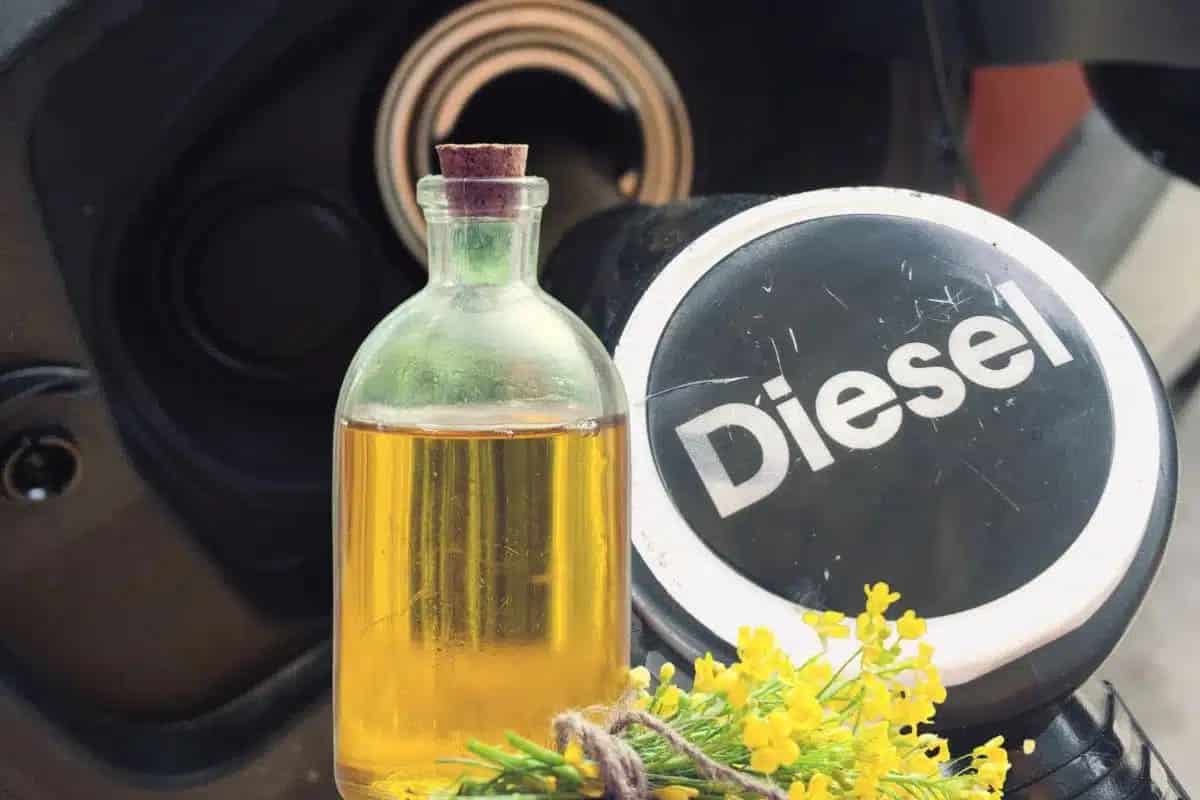
It was a chilly morning in late February when word began to spread: scientists in Russia had quietly unveiled a diesel engine breakthrough that might just flip the script on the electric vehicle (EV) revolution. It wasn’t some futuristic hydrogen tech or billion-dollar battery upgrade—it was something far more familiar. And far more controversial: rapeseed oil. That’s right, cooking oil’s cousin might be making a comeback—not in your kitchen, but under the hood of your car.
Can plants power our roads?
It’s no secret that the world is scrambling for cleaner fuel. Cities are banning diesel, EV sales are climbing, and everyone from carmakers to farmers is eyeing a greener future. Yet, diesel still dominates in places where electric motors struggle—think farms, freight trucks, and rural infrastructure. So, what if we could keep the engines but change the fuel?
That’s exactly what researchers at RUDN University claim to have done. Their team managed to retrofit a standard diesel engine to run efficiently on rapeseed oil, a biofuel that’s long been sidelined for being too thick and too smoky. I’ve seen farmers try to convert tractors to run on old fryer oil—more than once, the engines sputtered and died. The idea was always charming but rarely viable.
Until now, maybe.
The big problem with vegetable oil
Here’s the catch with using something like rapeseed oil as fuel: it’s not designed to burn in engines. It’s heavier, slower to vaporize, and harder to mix with air for combustion. The result? Clogged nozzles, poor efficiency, and enough smoke to ruin your weekend.
The RUDN engineers ran head-to-head comparisons between standard diesel fuel and rapeseed oil. Unsurprisingly, the veggie oil didn’t win any beauty contests. They found performance drop-offs, uneven combustion, and emission spikes. But instead of giving up, they got creative.
Tweaking the engine to fit the fuel
What followed was a series of precision adjustments—more surgery than engineering. By altering fuel injection timing and reconfiguring how fuel entered the chamber, they began closing the performance gap. Engineers also redesigned nozzle geometries and optimized how the rapeseed oil atomized under pressure.
These tweaks led to a smoother, cleaner burn—and suddenly, a centuries-old diesel engine was running on crops instead of crude. It’s a technical win that doesn’t just modernize diesel—it redeems it.
Could this lead to cleaner air?
Let’s talk emissions. Traditional diesel engines are notorious for spewing nitrogen oxides (NOx) and carbon monoxide—two pollutants public health experts love to hate. But this revamped rapeseed model? Early data suggests a significant drop in both, making it an appealing alternative for climate-conscious industries.
There’s also the logistics win: rapeseed is easy to grow in temperate regions, and fuel production can happen locally. That slashes transport emissions and gives farmers a new market. It’s not hard to imagine rural communities powering their tractors with crops from the next field over. It’s circular, practical, and—let’s be honest—kind of poetic.
Where does this leave electric vehicles?
For years, electric cars have dominated the clean transport narrative. They’re sleek, silent, and have fewer moving parts. But they’re not perfect. Batteries require rare minerals, and grid-charging infrastructure is still uneven—especially outside major cities.
This new biofuel innovation doesn’t threaten EVs directly, but it does introduce healthy competition. In sectors where EVs aren’t practical yet—agriculture, long-haul freight, or remote construction—biofuels like rapeseed oil could fill the gap without requiring a fleet overhaul.
Energy analyst Maria Korneva points out that “electrification is a marathon, not a sprint. Biofuels are a bridge—not a dead end.” That bridge could help developing regions decarbonize without waiting for battery prices to fall or chargers to appear.
A game-changer or a green stopgap?
So, will this be the end of the EV boom? Probably not. But it does give policymakers and engineers another tool in the decarbonization toolkit. In the same way that hybrid cars eased us into full electrification, a greener diesel engine might offer a smoother transition for hard-to-electrify sectors.
Think of it as evolution, not revolution. No single technology will save the planet, but a diverse mix just might.
As someone who’s driven both an electric hatchback in downtown traffic and a diesel truck across muddy fields, I can tell you—there’s room for both. And if that truck can run on oil from the crops it helped plant? Even better.
Similar Posts:
- This Breakthrough Diesel Engine Could Be the End of Electric Cars—Or Is It ?
- They drove 2,500 kilometers in an electric car and discovered one thing : diesel still reigns supreme
- 10 Cars That Easily Pass 300,000 km Without Breaking Down
- China’s Mega Battery : A Building-Sized Power Source That Could Revolutionize Transport

Jason R. Parker is a curious and creative writer who excels at turning complex topics into simple, practical advice to improve everyday life. With extensive experience in writing lifestyle tips, he helps readers navigate daily challenges, from time management to mental health. He believes that every day is a new opportunity to learn and grow.