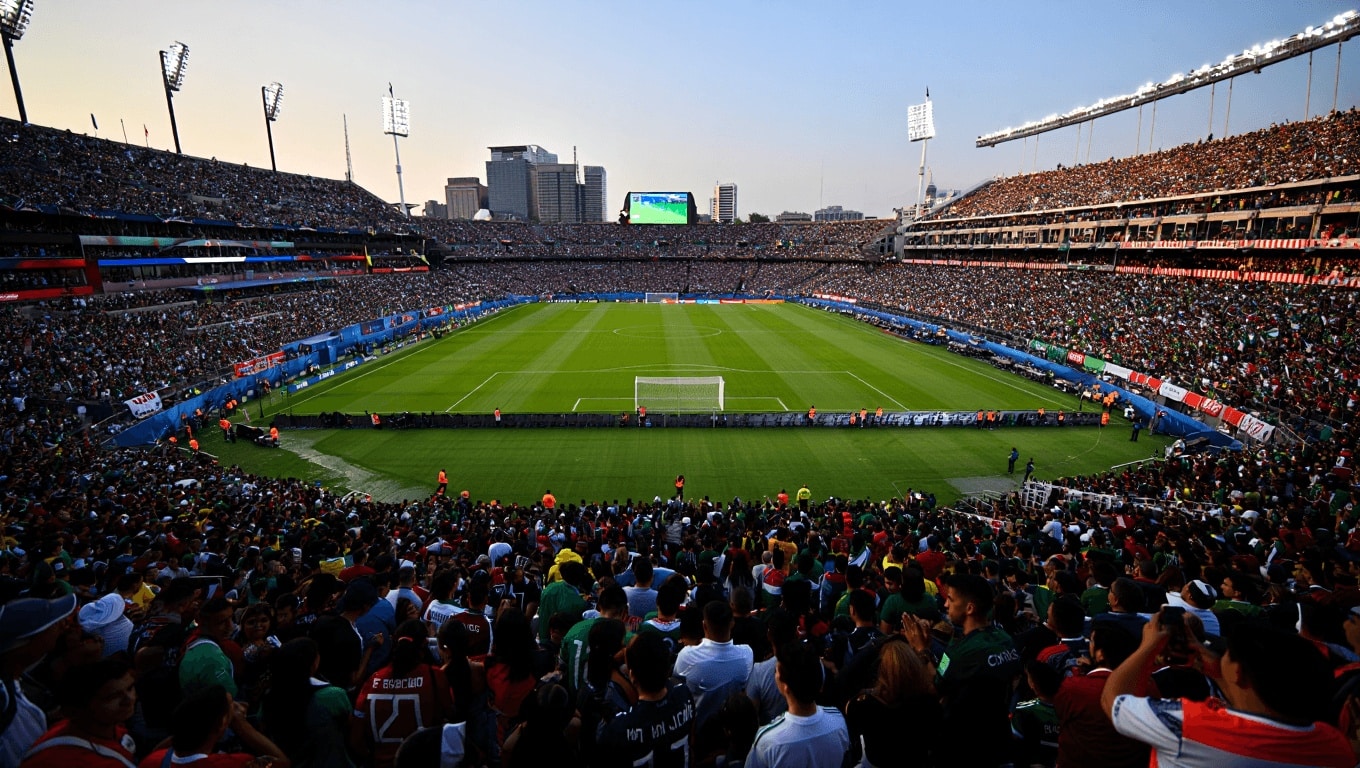
The excitement is palpable as we approach the highly anticipated kickoff of the World Cup. On June 11, at 1 PM local time (9 PM in Italy), the Mexico City Stadium will host the opening match between Mexico and South Africa. Yet, there’s an undercurrent of concern, as scientists warn about potential adverse weather conditions that could impact the tournament.
A recent study, soon to be published after peer review, highlights the unequal exposure of teams to various weather conditions during the FIFA World Cup 2026. Conducted by a team of scientists, this research sheds light on the meteorological challenges that could shape this sporting event, which will notably feature surveillance by robotic dogs.
Understanding the Research
One of the co-authors, **Davide Faranda** from the National Centre for Scientific Research in Paris, elaborated on the unique challenges posed by the tournament’s geographical diversity. He noted, “This World Cup will take place across three countries, each characterized by distinct climatic zones and four different time zones.”
The locations in question include:
– The **northern climate** of Vancouver
– The **desert regions** of Guadalajara, situated over 1,000 meters above sea level
– The **tropical climate** of Florida
– The high **humidity levels** around Chicago
– The threat of **tornadoes** in cities across the Great Plains, such as Kansas City and Atlanta
– The **Mediterranean climate** of California
Faranda emphasized that even without extreme weather events, teams traveling between stadiums will face significant adaptation challenges. He identified the **”wet bulb temperature”** as a major concern.
What is Wet Bulb Temperature?
For players, fans, and officials, the **wet bulb temperature** poses a significant risk. This metric takes into account the humidity of the air; if it exceeds a certain threshold, the risk of heatstroke increases since the human body can no longer effectively regulate temperature through sweating.
“The recommended wet bulb temperature for playing should be around 26 degrees Celsius, which equates to approximately 35-36 degrees of dry temperature,” Faranda explained. “However, based on the data we have, this threshold is likely to be exceeded consistently in cities like Kansas City, Atlanta, and Miami.”
Heat Waves and Air Conditioning
According to the expert, these regions will consistently face **heat wave risks**. “This risk has increased by 20% due to climate change. If the World Cup were held in a climate without greenhouse gas emissions, heat-related risks would be 20% lower,” he specified.
It’s also worth noting that teams playing in air-conditioned stadiums may not necessarily gain an advantage. “The temperature fluctuations from transitioning between air conditioning and outdoor temperatures often lead to discomfort and health issues. Moreover, not everything happens at the stadium; travel and celebrations typically occur outside the sports facilities,” he added.
Storms and Wildfires
In addition to heat waves, scientists are also concerned about the potential for **thunderstorms** during the tournament. “Last year, several matches in the Club World Cup held in the U.S. were interrupted due to rain and lightning. There’s a risk that this could happen again in Kansas, Chicago, and Atlanta,” Faranda remarked.
On the West Coast, worries mainly revolve around **air quality** and **wildfires**. “The situation could be exacerbated by the wildfires that affect the Los Angeles area every year,” he noted.
Similar Posts:
- Tokyo’s Unprecedented 35-Day Rain Record: What It Means for the City!
- Heat Waves Blamed on Big Industry? New Study Points Fingers at Major Companies!
- Why Do Extreme Cold Waves Continue Despite Global Warming ?
- Premier League Showdown: City Defeats Arsenal, Closing the Gap to Just 3 Points!
- Storm Approaching? Here’s What You Should NEVER Do!

Jason R. Parker is a curious and creative writer who excels at turning complex topics into simple, practical advice to improve everyday life. With extensive experience in writing lifestyle tips, he helps readers navigate daily challenges, from time management to mental health. He believes that every day is a new opportunity to learn and grow.