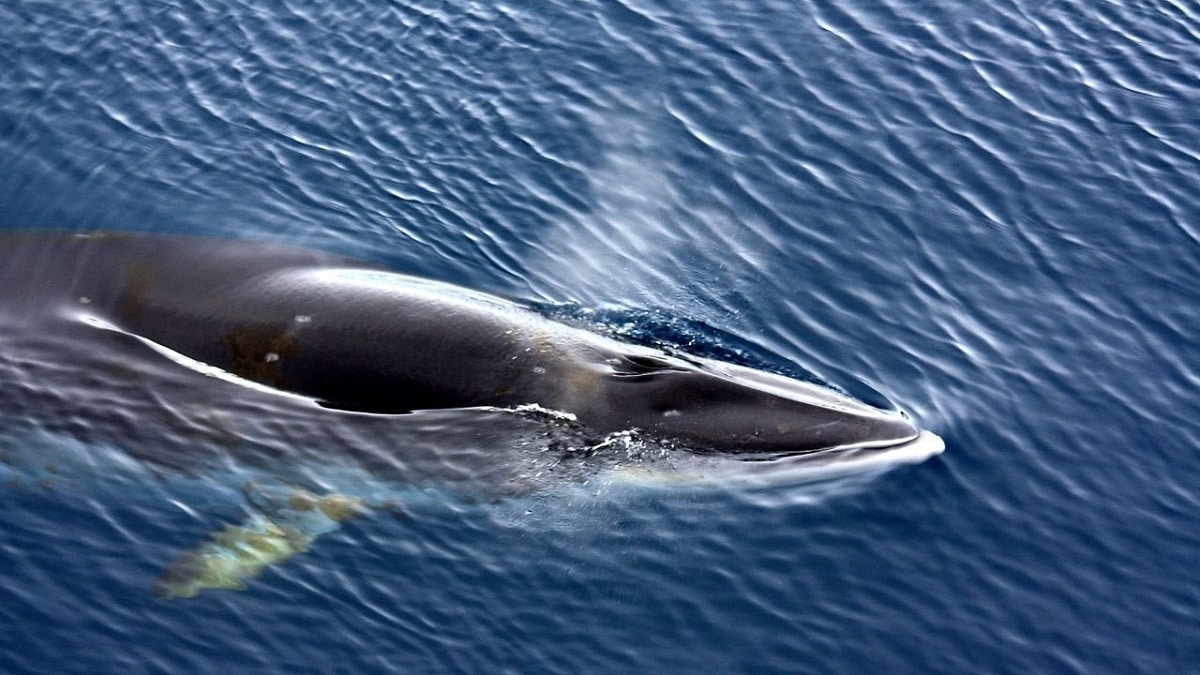
In the vastness of the ocean, baleen whales have developed a surprising strategy to avoid their greatest predators: by singing at frequencies so low that orcas, their main enemies, can’t hear them. This acoustic tactic is just one of the many fascinating survival mechanisms these majestic creatures use in their battle for survival in the wild.
The Ever-Present Threat of Orcas
Orcas are the only natural predators of baleen whales, and while some species fight back when attacked, others prefer to flee. This survival instinct doesn’t just influence their physical movements—it extends to how they communicate. Baleen whales use vocalizations to interact with each other, find mates, or navigate the oceans. But how do they manage to communicate without exposing themselves to orcas, who are known to detect sounds underwater over long distances?
The Theory of Acoustic Camouflage
Researchers from the University of Washington have uncovered an intriguing strategy : some baleen whale species sing at such low frequencies that orcas cannot perceive them. Orcas’ hearing abilities are limited to sounds above 100 hertz, meaning anything below that threshold is essentially undetectable. This phenomenon, known as acoustic crypsis, acts as an auditory form of camouflage.
The species that employ this tactic include the blue whale, Minke whale, Bryde’s whale, sei whale, and bowhead whale. These whales’ calls, which are inaudible to orcas, are also short-range, only carrying a distance of about one kilometer. This further reduces the risk of detection, allowing these whales to move through the ocean with relative stealth.
A Way of Life Shaped by Fear
On the other side of the spectrum, some whale species respond to orca attacks rather than fleeing. These include the right whale, gray whale, bowhead whale, and humpback whale. These species are typically larger, slower, and more maneuverable, traits that help them defend against predators. Their songs, which are often more complex and varied, operate at frequencies above 1,500 hertz, which are easily heard by orcas.
These acoustic differences reflect a broader divergence in the life strategies of these two groups.
- The “fleeing” species, which are faster and more streamlined, tend to spread out across vast oceanic expanses. While this reduces their chances of finding mates, it also lowers their exposure to predators.
- The “fighting” species, on the other hand, congregate in shallower coastal waters where collective defense is more effective. This strategy fosters easier social interactions and reproduction but places them at greater risk of orca attacks.
Striking a Balance Between Survival and Reproduction
Sound plays a key role in how baleen whales attract mates, too. In the species that flee from orcas, males sing long, low, repetitive songs to attract females from far distances. These deep calls are effective at helping females locate them without being overheard by predators.
In contrast, species that resist orcas tend to have more varied, higher-frequency songs, which are easier to hear even in noisy environments. While these songs help males attract mates, they also come with the heightened risk of drawing the attention of orcas.
Evolution Shaped by the Fear of Orcas
This study reveals how the fear of orcas has shaped nearly every aspect of the baleen whale’s life, from their movement patterns to their mating behaviors. Some whales have adapted to be discreet, while others face the threat head-on by gathering in groups and defending themselves.
In the vast oceans, a silent war is waged beneath the surface. Through their deep, resonant songs and high-pitched calls, baleen whales are orchestrating their survival with strategies finely tuned to their environment and the predators that roam its depths. Whether by blending into the shadows or by standing their ground, these whales have found their own ways to thrive amidst danger.
Similar Posts:
- Whale moves hint at a crypto market shake-up this April
- Scientists are shocked by the rediscovery of a species thought extinct for eight decades
- Tired of Telemarketing Calls? Try This Simple Trick to End Them for Good
- Alien Species Threatens Italian Seas Again: What’s Happening After the Blue Crab?
- Bitcoin shorts skyrocket as big investors quietly take their positions

Jason R. Parker is a curious and creative writer who excels at turning complex topics into simple, practical advice to improve everyday life. With extensive experience in writing lifestyle tips, he helps readers navigate daily challenges, from time management to mental health. He believes that every day is a new opportunity to learn and grow.