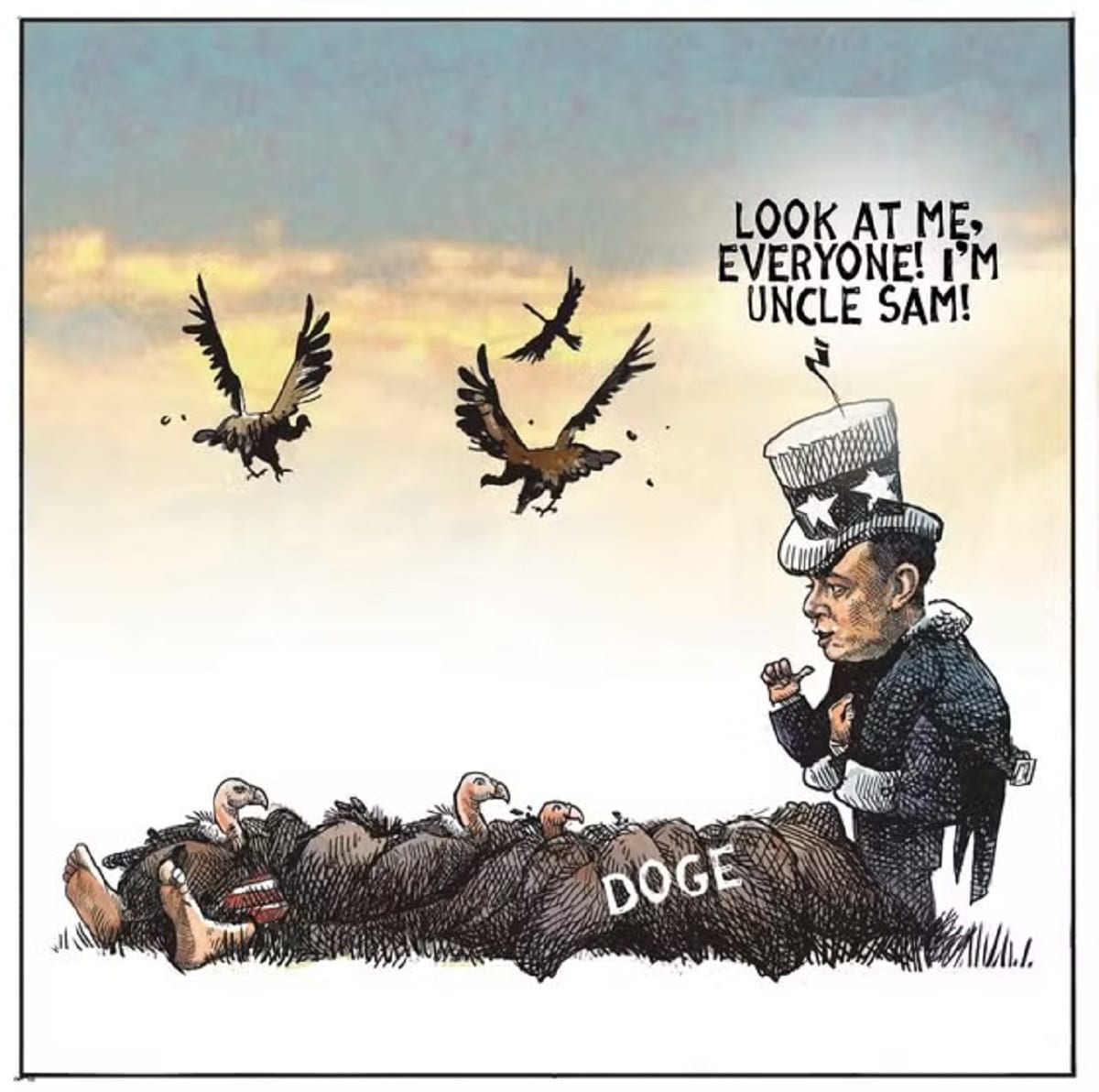
In recent years, both Elon Musk and Donald Trump have sparked debates on the future of governance in the United States, with some arguing that their actions are steering the country toward a model of capitalism without democracy. This idea, explored by historian Quinn Slobodian, suggests that the dynamic between capitalism and democracy has always been contentious, and that the rise of certain influential figures could push the U.S. toward a more authoritarian, business-driven system—akin to Dubai’s model of governance.
Musk’s Vision: Government as a Start-Up
Musk’s approach to governance, especially with his involvement in ventures like Tesla and Twitter, has led some to suggest that he treats the U.S. government like a start-up. Slobodian points out that Musk’s goal may not be to destroy the government completely, but rather to trim it down drastically—cutting costs, reducing bureaucracy, and potentially creating a more efficient structure. This could align with libertarian conservative ideals that seek to limit the state’s role in areas such as social welfare, education, and energy regulation. In this vision, government responsibility would be reduced to a more minimalistic role, focusing on essential services while leaving much of the social fabric to the private sector.
A More Radical Path: Disassembling the State
Taking this further, Slobodian suggests a more radical interpretation: that Musk may be aiming to break the state entirely, making it impossible to rebuild in its current form. If this were to happen, new forms of government would need to emerge—likely at a more decentralized and local level. This scenario, Slobodian argues, would be fundamentally undemocratic, as Musk and others in similar positions are unelected and wield significant influence without formal authority. Most of their actions, Slobodian notes, would be in violation of constitutional principles.
The Tension Between Capitalism and Democracy
Slobodian also delves into the historic tension between capitalism and democracy. For much of the 20th century, it was believed that a true democracy would lead to socialism, as the masses would vote for policies that favored wealth redistribution and expropriation. However, the post-WWII period, when capitalism and democracy seemed to coexist harmoniously in the West, was an anomaly.
By the 1990s and 2000s, non-democratic capitalist states—such as China, Singapore, and Dubai—had become the primary success stories. These countries showed that capitalism could thrive without democracy, challenging the notion that they were inherently linked. As Slobodian points out, things like the rule of law, property rights, and transparency can exist under authoritarian regimes, and it’s possible to have these elements without a fully democratic system. In fact, some of the world’s most successful authoritarian states boast these characteristics.
Dubai as a Model for Capitalism Without Democracy?
The example of Dubai serves as an important point of reference for understanding this shift. Slobodian argues that if you want to understand figures like Trump, looking to Dubai in 2025 might be more insightful than looking to the past, such as the Nazi regime in the 1930s. Dubai’s model of governance is small, fragmented into smaller jurisdictions designed to attract investors. It’s built on global real estate and investment rather than the local population’s needs. A small percentage of its residents are citizens, while the majority are migrant workers who can be deported at any time.
Could this model be replicated in a much larger country like the United States? According to Slobodian, there are already signs of this trend. For example, Elon Musk is developing a private city in Texas to support his SpaceX operations, and Mark Zuckerberg is considering relocating Meta there as well. This reflects an internal reorganization within the U.S., with wealthy individuals and companies positioning themselves in states with favorable business climates, sometimes creating a kind of privatized urban space reminiscent of Dubai—where the wealthy live behind gated communities and an army of low-wage workers come in to perform service jobs and then leave at the end of the day.
Can Democracy Prevail?
Despite these shifts, Slobodian remains hopeful that democracy can still have a place in the future of the U.S. While figures like Trump and Musk are pushing the country toward a more authoritarian form of capitalism, Slobodian believes there’s still room for popular sovereignty and democratic ideals to take hold. There’s nothing inevitable about the success of these anti-democratic movements, he argues, and there’s still potential for citizens to reclaim power and steer the country back toward a more democratic model of governance.
In the end, the tension between capitalism and democracy is not new, but as the U.S. faces increasing pressure from powerful figures, it’s important to keep the conversation alive. Whether the nation’s future will be shaped by a capitalist system without democracy remains uncertain, but as Slobodian suggests, the battle is far from over.
Similar Posts:
- Grok 3 blocks criticism of Elon Musk and Donald Trump
- Canada Launches Petition to Strip Elon Musk of His Citizenship
- How Much Would It Cost? Elon Musk Might Be Interested in Buying a Major News Network
- Celebrities Who Left X Since Donald Trump’s Election
- The Pentagon, FBI, and other agencies advise employees to disregard Elon Musk’s directive to justify their activities
Jason R. Parker is a curious and creative writer who excels at turning complex topics into simple, practical advice to improve everyday life. With extensive experience in writing lifestyle tips, he helps readers navigate daily challenges, from time management to mental health. He believes that every day is a new opportunity to learn and grow.