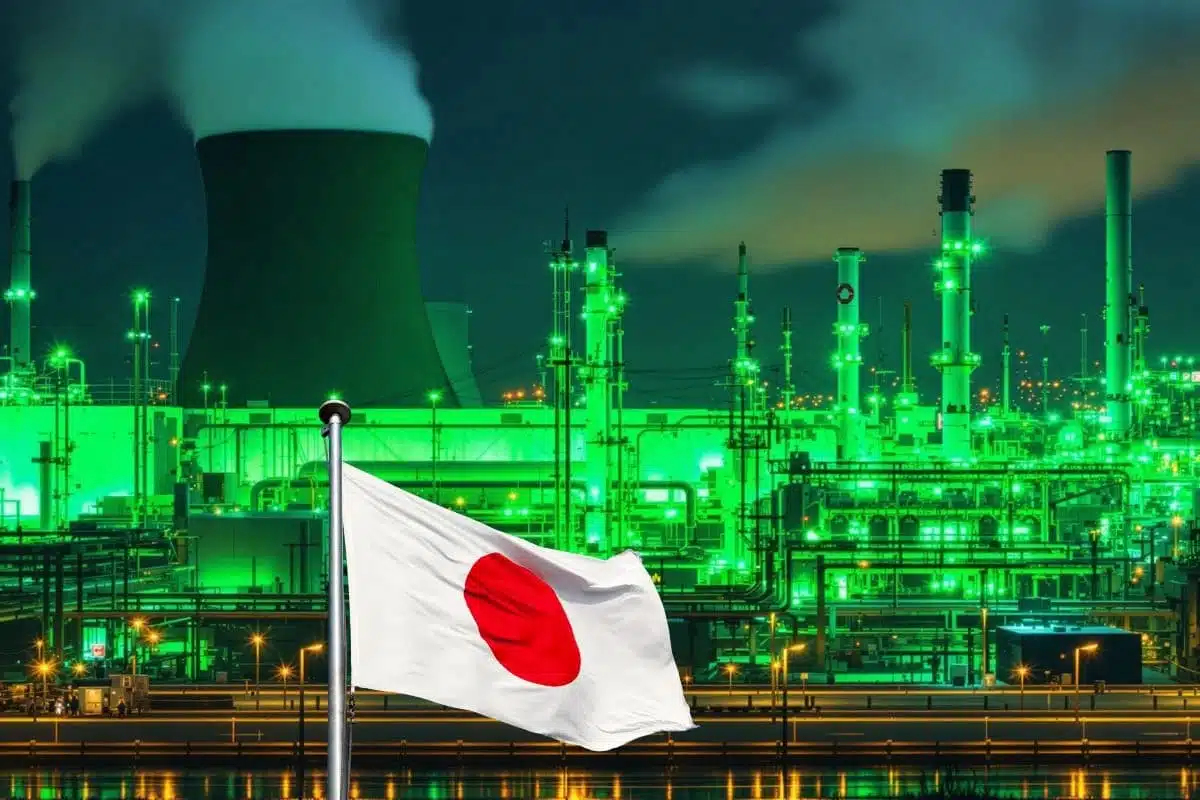
In a bold step towards the future of clean energy, Japan is becoming the first country to implement a pioneering project that combines nuclear power and hydrogen production. This innovative venture, led by the Japan Atomic Energy Agency (JAEA), aims to use a fourth-generation nuclear reactor to produce hydrogen without emitting carbon dioxide, setting the stage for a more sustainable energy future.
Japan’s Ambitious Plan to Use a Generation IV Nuclear Reactor for “Green” Hydrogen Production
The key to this breakthrough lies in Japan’s use of a high-temperature gas-cooled reactor (HTGR). Unlike conventional reactors, the HTGR can reach temperatures exceeding 800°C, much higher than traditional reactors, which typically operate at much lower temperatures. This elevated heat allows the reactor to power a process known as the sulfur-iodine cycle, a thermochemical method that efficiently splits water into hydrogen and oxygen.
This process is not only more energy-efficient but also eco-friendly, as it doesn’t rely on fossil fuels or produce greenhouse gas emissions. By harnessing the reactor’s heat, Japan hopes to generate hydrogen, a key fuel for various industries, transportation, and even future energy storage solutions, all while reducing its carbon footprint.
What Are Generation IV Nuclear Reactors ?
The concept of Generation IV nuclear reactors encompasses six primary designs aimed at enhancing safety, sustainability, and economic competitiveness. These include:
- Fast Neutron Reactors (FNR)
- Sodium-cooled FNR (SFR)
- Gas-cooled FNR (GFR)
- Lead-cooled FNR (LFR)
- Very High Temperature Reactor (VHTR)
- Molten Salt Reactor (MSR)
- Supercritical Water Reactor (SCWR)
These reactors are built to meet strict standards of safety, reduce nuclear proliferation risks, and increase the sustainability of nuclear energy. Among them, sodium-cooled fast neutron reactors (SFRs) are the most advanced, with prototypes already operational in countries like France. The HTGR, part of this generation, is particularly promising for its ability to serve dual purposes: generating both electricity and hydrogen.
Advantages and Potential of the HTGR Reactor
The HTGR stands out for its versatility. It not only produces electricity but also supports the large-scale production of hydrogen—a crucial component for decarbonizing sectors like transportation, industrial energy needs, and chemical manufacturing. The ability to produce hydrogen using a nuclear reactor that generates both electricity and heat positions the HTGR as a potential cornerstone of the future energy landscape, providing solutions to multiple global challenges simultaneously.
Implementation and Project Goals
The project will be centered around the High Temperature Engineering Test Reactor (HTTR) located in Oarai, in the Ibaraki Prefecture. This facility will play a pivotal role in linking the hydrogen production unit to the HTTR. The reactor will use high-temperature helium gas to catalyze a reaction between water and methane, producing large quantities of hydrogen in an efficient manner.
With construction set to begin in 2026, the Japan Atomic Energy Agency (JAEA) plans to have hydrogen production up and running by 2030, with a goal of expanding the technology for commercial use by the late 2030s. However, before moving forward, JAEA will need approval from the Nuclear Regulation Authority (NRA), ensuring that the hydrogen production process aligns with stringent safety regulations.
Regulatory Challenges and Commercial Prospects
While the project’s ambitious nature is clear, the path to implementation is not without challenges. Regulatory approval is a critical step before construction can begin, and JAEA must address any concerns regarding the potential impact of hydrogen production on the nuclear safety standards already in place. Nonetheless, the project represents a significant milestone in the journey towards green hydrogen as a viable energy solution.
Looking ahead, the hope is that Japan’s success with this technology could lead the way for other nations to explore similar solutions for hydrogen production. This project has the potential to be a model for sustainable energy integration, combining the power of nuclear technology with the growing demand for hydrogen in various industries.
Innovations and Advances in Hydrogen Production
While Japan’s approach is groundbreaking, it is not the only country exploring innovative ways to produce hydrogen. Recent developments in places like South Korea and Canada have focused on making the hydrogen production process faster, more efficient, and less energy-intensive. Innovations like using microwave technology to produce hydrogen in minutes or leveraging artificial intelligence to make hydrogen production cheaper and more efficient could further drive the cost-effectiveness of green hydrogen technologies.
Japan’s ambitious venture into high-temperature nuclear reactors for hydrogen production is just the beginning of what promises to be an exciting new era in the global energy landscape. With clean, sustainable, and scalable energy solutions in the works, the future is looking brighter for both hydrogen and nuclear power.
Similar Posts:
- The United States plans to deploy floating nuclear plants across the oceans to generate 175 GWh annually
- This French City Will Host the First of These High-Tech Nuclear Reactors, Boosting France’s Position as a Global Nuclear Leader
- France stands at the core of a project that could transform our nuclear reactors forever
- India Relies on France and Future Nuclear Tech to Catch Up in Civil Nuclear Power
- Inspired by Grenoble’s project, the United States is banking on a stellarator nuclear fusion reactor

Jason R. Parker is a curious and creative writer who excels at turning complex topics into simple, practical advice to improve everyday life. With extensive experience in writing lifestyle tips, he helps readers navigate daily challenges, from time management to mental health. He believes that every day is a new opportunity to learn and grow.