Over the past decade, China has transformed from a mere consumer of video games to a global powerhouse in gaming development. The release of Black Myth: Wukong, which generated a staggering $1 billion in just two months, has put China’s gaming scene on the map in a way that challenges the dominance of Western and Japanese game developers. So, how did this massive shift happen? What’s the secret behind China’s rise as a major player in the gaming industry ?
Chinese Players Are Spending More Than Ever
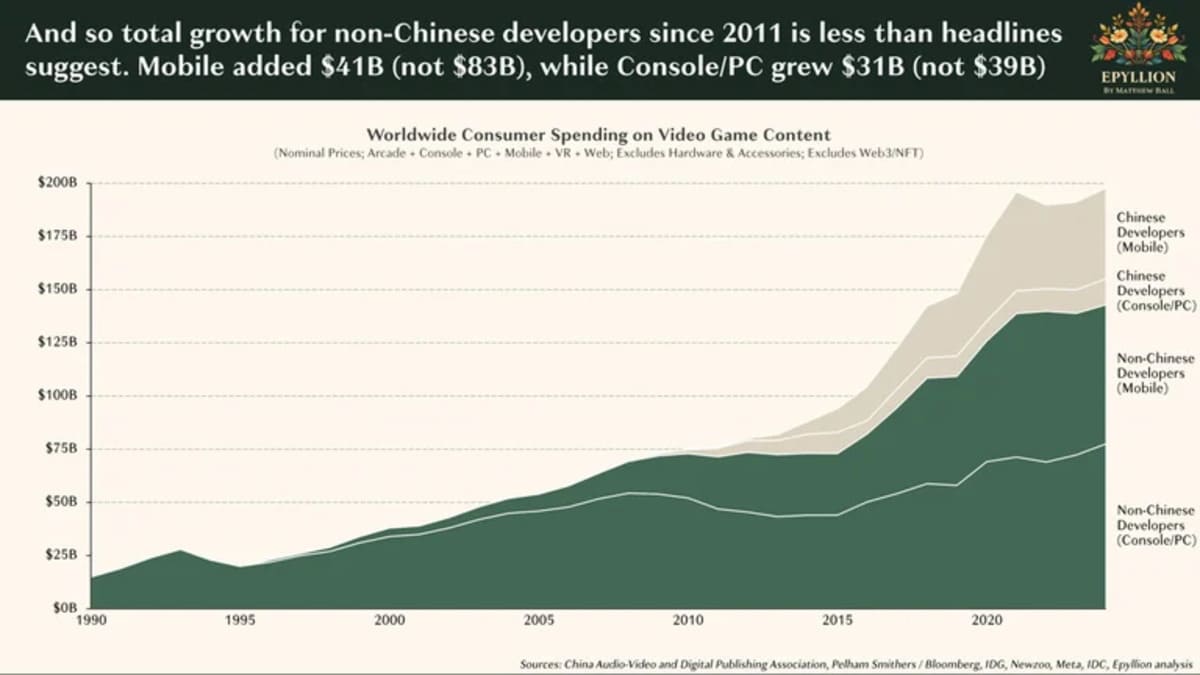
One of the key drivers of China’s gaming boom is the increasing appetite for video games among Chinese consumers. A report from industry expert Matthew Ball sheds light on how the country has become a global leader in gaming consumption. Since 2011, China’s spending on video games has surged by $39 billion, representing about one-third of global growth in the sector. By 2020, the Chinese gaming market surpassed $40 billion, with mobile gaming emerging as a major contributor to this growth.

Before 2014, the mobile gaming market in China was relatively quiet. But by 2016, it became a powerhouse, helping push China to claim one-third of global mobile gaming revenue. This dominance in the mobile gaming space is especially impressive, considering that China’s population exceeds 1.4 billion, and around 670 million of them are gamers. With such a massive audience, it’s no wonder that Chinese developers have the resources and motivation to create games that cater to both domestic and international markets.

Games Made for China, But Winning Overseas
One factor that often frustrates Western gamers and industry observers is China’s focus on developing games specifically for its own market. A mere 20% of Chinese gamers’ spending goes toward non-Chinese games. And many popular Western titles, such as GTA V, Call of Duty, and Animal Crossing: New Horizons, are banned or simply don’t reach the Chinese market due to local regulations. Yet, despite this, Chinese-developed games have started to rival global hits in sales, with Black Myth: Wukong proving to be a prime example.
The game, often hailed as China’s first AAA title to rival the likes of FromSoftware’s Elden Ring or God of War, has seen sales figures in China that would be the envy of many global blockbusters. In fact, it’s common for sales in China to match the global sales figures of major Western and Japanese games. What’s more, 75% of Black Myth: Wukong sales have come from within China itself, demonstrating how local developers are catering to the tastes of the world’s largest gaming market.

Protectionism Fuels Local Gaming Growth
Another driving force behind China’s gaming success is a certain level of protectionism. While this may not be a new phenomenon, it has been more noticeable in recent years. As seen in a report by Matthew Ball, no foreign films made it into the top 10 most-watched films in China over the past two years, compared to four in 2018. This trend has mirrored China’s attitude toward local gaming content. In 2024, only 110 out of 1,400 games approved by the Chinese government were from foreign developers. Over the past decade, the share of games made in China contributing to the country’s total gaming revenue has skyrocketed from 60% to 80%.

Chinese consumers have developed a strong preference for locally produced cultural products, and video games are no exception. This protectionist mindset has allowed domestic game studios to thrive by tapping into a massive, eager audience. And, as the success of Genshin Impact—which earned over $9 billion globally—shows, Chinese developers are no longer just dominating their own market but are now expanding their reach worldwide.
A Growing Global Presence
At the same time, Chinese games are making significant inroads overseas. Genshin Impact is one of the most notable examples, with 44% of its earnings coming from markets outside of China. Games like Marvel Rivals, developed by NetEase, have found commercial success despite the heavy American branding. Over the past 13 years, the share of Chinese-made games in global content spending has grown from 0.5% to a staggering 13%, a surge that now totals over $19 billion annually.
As Chinese games continue to increase their market share, Western studios are beginning to feel the effects. The shift in consumer preferences is becoming undeniable, and it’s clear that China’s influence on the global gaming market is only going to grow stronger.
The Future: Will China Continue to Lead?
Looking ahead, the question is whether this momentum will continue. According to Matthew Ball, the overall growth of non-Chinese developers since 2011 has been slower than many have assumed. When examining global gaming sales, China’s contributions are impressive: the country is expected to generate $60 billion of the $200 billion total in 2024. China’s gaming market is not only the largest non-Western market but also one of the most mature.
Major Chinese companies like Tencent and NetEase are already among the world’s top five highest-earning gaming companies, having heavily invested in Western studios to expand their reach and bypass local regulations. However, NetEase is now reconsidering this strategy, creating uncertainty for several Western developers who have relied on these partnerships.
With powerful game engines like Unreal Engine becoming more accessible to Asian developers and the rise of AI-driven game development, the landscape for AAA games in China is evolving rapidly. As Chinese developers continue to refine their production values and create globally appealing titles, games like Lost Soul Aside, Phantom Blade Zero, and Wuchang: Fallen Feathers might just become the next big international hits. The next few months could very well reveal whether these titles will assert themselves with the same impact as Black Myth: Wukong.
China’s gaming industry is on the rise, and if current trends continue, the country may very well emerge as the new global leader in the world of video games. The secret to their success? A combination of strategic protectionism, massive local demand, and an increasingly sophisticated approach to game development. The world better be ready.
Similar Posts:
- No, video games don’t make people violent. They might even help teenagers
- Xiaomi’s debut electric car already outperforms the Tesla Model 3 in the Chinese market
- AI Breakthrough Ignites Chinese Tech Surge: DeepSeek’s New Model Outshines Nvidia, Boosts EV Stocks
- Why Is Elon Musk’s Mother Gaining Popularity in China?
- China’s Mega Battery : A Building-Sized Power Source That Could Revolutionize Transport

Jason R. Parker is a curious and creative writer who excels at turning complex topics into simple, practical advice to improve everyday life. With extensive experience in writing lifestyle tips, he helps readers navigate daily challenges, from time management to mental health. He believes that every day is a new opportunity to learn and grow.