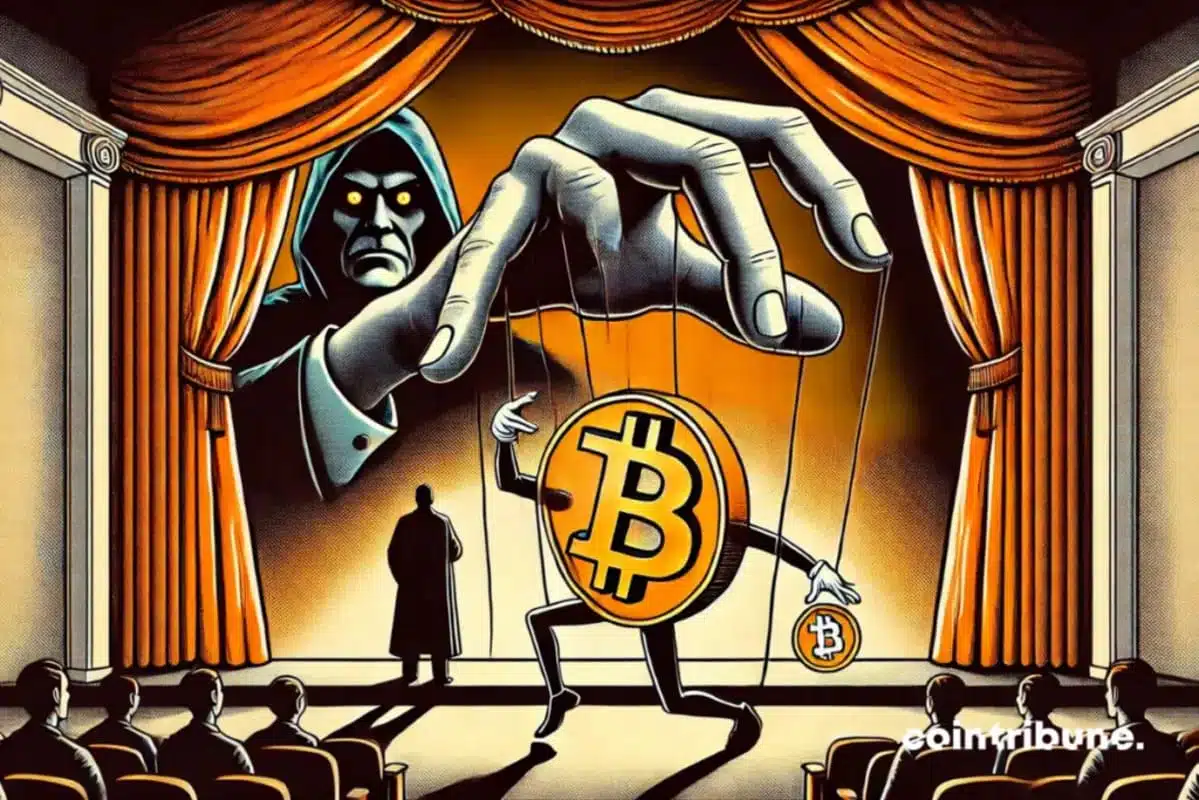
In recent months, the cryptocurrency market has been abuzz with optimism, fueled by the ongoing economic uncertainty. Some, like BlackRock, have seen the potential for Bitcoin to thrive during a recession, but the U.S. Federal Reserve has recently cast a cold shadow over these hopes. As the market continues to navigate choppy waters, the contrasting views of economic giants and regulators are making it hard to predict what’s next for the cryptocurrency.
Why the Crisis Could Boost Bitcoin ?
Robbie Mitchnick, a crypto strategist at BlackRock, sparked a heated debate when he claimed that a potential recession could serve as a “great catalyst” for Bitcoin. While this may sound counterintuitive to some, it aligns with historical trends. Since 2008, systemic crises have often driven investors toward alternative assets, with Bitcoin, in particular, gaining attention as a hedge against traditional fiat currencies.
The reasoning behind this is clear: with stimulus packages, low interest rates, and rising government deficits, many investors begin to lose confidence in traditional currencies. In these turbulent times, Bitcoin is often seen as a form of “insurance” against financial collapse. This was especially evident during the global lockdowns of 2020 when Bitcoin’s value surged in response to massive money printing by governments worldwide.
However, while Mitchnick’s view paints a positive picture for Bitcoin during a recession, he also acknowledges the darker side of economic downturns. Social unrest is often a byproduct of such crises, which could create a volatile environment. In this context, Bitcoin might not just benefit from economic instability; it could capitalize on a growing distrust in institutions and governments, much like it did during the 2020 lockdowns.
BlackRock’s Larry Fink has been particularly vocal about the risks posed by stagflation—a scenario that many fear could arise from the policies of the Trump administration. He views Bitcoin as a potential safeguard against this economic nightmare, which has helped to fuel institutional interest in the asset.
Despite Bitcoin’s impressive performance, the cryptocurrency market is far from stable. After reaching an all-time high of $110,000 in January, Bitcoin’s value dropped to around $85,000. The volatility remains a constant factor, but BlackRock’s involvement with Bitcoin ETFs—holding $50 billion in its IBIT fund—signals that the institution believes the market is maturing, despite these fluctuations.
The Fed Strikes Back : A Warning That Cools Crypto Enthusiasm
Just as some were growing increasingly confident in Bitcoin’s potential as an economic hedge, Jerome Powell, the Chairman of the U.S. Federal Reserve, poured cold water on these hopes. Recently, Powell acknowledged that while the risk of a recession has risen, it remains “moderate” at best. He emphasized the persistent issue of inflation and the Fed’s commitment to maintaining interest rates at current levels.
This cautious stance from the Fed signals that a drastic cut in interest rates—which Bitcoin often thrives on—may not be in the cards anytime soon. For Bitcoin miners and investors who have grown accustomed to cheap credit, Powell’s comments are a stark reminder that economic conditions are not as favorable as they once seemed. For many, the possibility of further tightening could limit Bitcoin’s rally, especially in a volatile market like cryptocurrency.
Economists have been quick to point out that Trump-era tariffs and trade policies could be exacerbating the situation, potentially leading to an “inevitable” recession. In fact, some, like Mark Zandi of Moody’s, are already predicting a deep crisis due to these policies. These warnings, paired with the recent turbulence in Bitcoin’s price, highlight a central question: Is Bitcoin truly thriving because of crises, or in spite of them?
Bitcoin ETFs : An Ambiguous Indicator
The growing popularity of Bitcoin ETFs has been one of the most significant developments in the cryptocurrency market. BlackRock’s ETF, which saw assets reach $100 billion in November, is a testament to institutional faith in Bitcoin. However, in the wake of the Fed’s warnings, the growth of these ETFs has started to slow down, suggesting that institutional investors are becoming more cautious.
While Bitcoin ETFs are still attracting considerable attention, the uncertainty surrounding the broader economy has led to a more strategic approach by many institutional investors. They are now weighing the long-term prospects of Bitcoin against the current macro risks of the economy, with some adopting a wait-and-see attitude.
That said, BlackRock remains committed to its view that a recession-friendly Bitcoin is a solid investment. Their continued support of the cryptocurrency, despite the Fed’s warning signals, suggests a belief that Bitcoin will ultimately benefit from the economic turmoil. Large investors are already positioning themselves for what they perceive as an inevitable shift in the market.
Navigating the Crosscurrents of the Crypto Market
Bitcoin’s journey remains as unpredictable as ever. On one hand, advocates like BlackRock see the potential for the cryptocurrency to serve as a safe haven during economic crises. On the other hand, the Federal Reserve’s stance on inflation and interest rates is cooling the enthusiasm for a Bitcoin rally in the near term.
The contrast between these views paints a picture of a market in flux, where institutional investors are torn between optimism about Bitcoin’s future and the economic headwinds that lie ahead. As this delicate balance plays out, it’s clear that navigating the crypto space will require more than just following market trends—it will take a careful understanding of both the global economy and the evolving role of cryptocurrencies in it.
Similar Posts:
- BlackRock’s bold Bitcoin move: how Europe’s banks might soon follow ?
- Bitcoin ETFs See Largest Influx Since January – A Game-Changing Shift
- BlackRock’s latest Bitcoin move could bring crypto into European banks
- Bitcoin slips, Ether rebounds as crypto ETFs shift gears
- Crypto in 2025: Steno Research Predicts a Year for the History Books

Jason R. Parker is a curious and creative writer who excels at turning complex topics into simple, practical advice to improve everyday life. With extensive experience in writing lifestyle tips, he helps readers navigate daily challenges, from time management to mental health. He believes that every day is a new opportunity to learn and grow.